


SoftWave vs Cortisone Injections in Traverse City MI: What to Know Before Your Next Shot
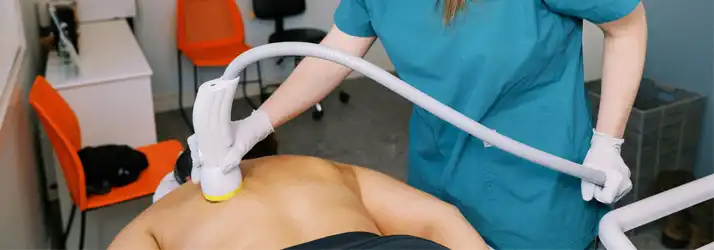
Cortisone injections often quiet pain quickly by reducing inflammation. SoftWave is a non-invasive acoustic therapy used at Shift to support a tissue repair response after evaluation. In studies, steroids often look stronger early; but shockwave-style care often looks stronger on longer follow-up. The better next step depends on diagnosis, timing, and goals.
If you were offered a cortisone shot for plantar fasciitis, shoulder, knee, hip, or chronic soft tissue pain, or if a prior shot helped briefly and then wore off, this page compares the two options in plain language. It also shows how SoftWave therapy in Traverse City MI fits inside the Shift Solution at our Traverse City clinic, and what to do next if you want an evaluation.
SoftWave vs Cortisone At A Glance in Traverse City MI
What it is
- Cortisone (steroid) injection - A medication injection that reduces inflammation in a targeted area
- SoftWave therapy (at Shift) - Unfocused electrohydraulic acoustic (shockwave) energy delivered through the skin
Mechanism
- Cortisone (steroid) injection - Strong anti-inflammatory effect that can quiet pain signals quickly
- SoftWave therapy (at Shift) - Used to support blood flow, inflammation modulation, and repair signaling in irritated tissue
Invasiveness
- Cortisone (steroid) injection - Needle injection into or near the painful region
- SoftWave therapy (at Shift) - Non-invasive; no medication injected
Typical speed of symptom change
- Cortisone (steroid) injection - Often faster early relief for many people
- SoftWave therapy (at Shift) - Often builds over a course of care; timing varies by person and condition
Longer-term durability
- Cortisone (steroid) injection - Relief is often temporary for chronic tendon and soft tissue problems (Coombes et al., 2010)
- SoftWave therapy (at Shift) - For chronic plantar fasciitis, research comparing shockwave-style care with cortisone often finds steroids help sooner, while shockwave-style care holds up better later. SoftWave is the tool we use at Shift.
Effect on tissue structure
- Cortisone (steroid) injection - Does not rebuild tendon or fascia structure
- SoftWave therapy (at Shift) - Aimed at supporting a repair response rather than only suppressing inflammation
How often it is repeated
- Cortisone (steroid) injection - Repeat injections are limited by medical guidance and tissue concerns discussed for tendinopathy (Coombes et al., 2010)
- SoftWave therapy (at Shift) - Visit count is plan-dependent after evaluation (1x/wk treatment for 6-10 weeks is most common)
Downtime
- Cortisone (steroid) injection - Usually limited; your physician sets activity guidance
- SoftWave therapy (at Shift) - Usually limited; your physician sets activity guidance
Best-fit role
- Cortisone (steroid) injection - Acute high-irritability flares, short-term goals, or when your physician recommends it for a specific diagnosis
- SoftWave therapy (at Shift) - Tissue support that provides long term healing instead of a short term fix
What A Cortisone (steroid) Injection Does
A cortisone (corticosteroid) injection delivers a potent anti-inflammatory medication near an irritated joint, bursa, tendon, or fascia. Many people notice pain quiet down in the days after a shot. That speed is why cortisone is still a common option for flares.
A steroid shot does not rebuild tendon or fascia structure. For chronic soft tissue problems, relief often fades. Repeated injections can raise concerns for breaking down tendons in the medical literature (Coombes et al., 2010).
If your main question is plantar fasciitis and cortisone specifically, we also published a deeper plantar-focused piece: Why cortisone fails plantar fasciitis in Traverse City. This post stays multi-joint so you can compare SoftWave vs cortisone across common soft tissue sites.
What SoftWave Therapy Does
SoftWave is an unfocused electrohydraulic form of extracorporeal shockwave therapy (ESWT). The device delivers acoustic energy through the skin. We use it to support blood flow, help control local inflammation, and encourage actual repair in irritated tissue.
SoftWave does not inject medication. For a deeper how-it-works walkthrough, see our SoftWave therapy hub and SoftWave explainer.
What The Research Shows (and what it does not)
Head-to-head research comparing extracorporeal shockwave therapy (ESWT) with corticosteroid injections often shows a timing pattern: steroids frequently look better in the first weeks, while ESWT often looks better at longer follow-up for chronic plantar fasciitis and related soft tissue problems (Hocaoglu et al., 2017; Lai et al., 2018; Li et al., 2018; Cortés-Pérez et al., 2024).
What does this mean for you? If you are looking for long term healing, rather than a short term patch-up, then SoftWave may be the better choice.
When Cortisone May Still Make Sense
This page is not anti-medicine. A cortisone injection may still be reasonable when:
- You have an acute, highly irritable flare and need a short window of quieter tissue to move or sleep.
- You understand the relief may be temporary and you have a plan for what comes after the anti-inflammatory window.
Respect your physician’s advice on injection decisions. SoftWave evaluation at Shift does not replace that conversation.
SoftWave Before Another Injection
Many adults in Northern Michigan ask about SoftWave after a shot helped for a while and then wore off. They want tissue support, and they are wary of stacking unmanaged steroids.
SoftWave first is often discussed when the goal is supporting repair signaling rather than opening another short anti-inflammatory window. A recent steroid injection can change our recommendations of undergoing SoftWave treatment. The reason for this is because SoftWave is signaling healing chemicals to come to the area of injury. Oftentimes, cortisone shots wipe out that healing response, leaving us with a net neutral outcome.
How Shift uses SoftWave inside the Shift Solution
SoftWave at Shift sits inside the Shift Solution. It is a tool in the plan, not always the whole plan.
Identify Root Cause(s)
Care starts with an exam and history. X-rays, a foot scan, digital posture analysis, and other testing are used when relevant. Pain location does not always mean that is where the root cause is coming from. Structure, load, biomechanics, and tissue irritability all matter.
Tissue Transformation
When SoftWave fits, it is used during Tissue Transformation to support soft tissue recovery alongside the rest of your custom plan. SoftWave may pair with other clinic tools when appropriate.
Lifestyle Optimization
Lasting progress needs habits and follow-through. Lifestyle Optimization (including our VIP Lifestyle Care) closes the plan so gains are protected after the active tissue phase.
If SoftWave is not the right fit, we will let you know.
Conditions people commonly compare on this page
People comparing SoftWave vs cortisone at Shift often have one of these presentations:
- Plantar fasciitis: Heel and arch pain that flares with first steps or longer standing. Start with our plantar fasciitis hub, and use the plantar cortisone deep-dive when your question is foot-specific.
- Shoulder pain: Irritated rotator cuff, bursitis-type pain, or limited reach. See shoulder pain care at Shift.
- Hip and knee pain: Greater trochanteric / gluteal soft tissue pain, or knee soft tissue irritation that keeps returning after short relief. See hip and knee pain.
- Chronic soft tissue pain: Tendon or fascia problems that quiet briefly with anti-inflammatories and then return with normal load.
Who This Comparison is for in Traverse City / Northern Michigan
This comparison is written for adults in Traverse City who are weighing SoftWave vs a cortisone (steroid) injection for joint or soft tissue pain. It is also for people who already had a shot that wore off and want a clearer next step than another needle by default.
FAQ
SoftWave vs cortisone: which is better for joint or soft tissue pain?
Should I try SoftWave before another cortisone shot?
Does SoftWave hurt, and how many visits will I need?
Is SoftWave covered by insurance?
Can I still get a cortisone shot later if I try SoftWave first?
Next step
If you are comparing SoftWave vs cortisone for joint or soft tissue pain near Traverse City, start with an evaluation. We will look at root drivers, explain whether SoftWave fits inside Tissue Transformation for your case, and be honest if it does not.
References
1. Hocaoglu S, Vurdem UE, Cebicci MA, Sutbeyaz ST, Guldeste Z, Yunsuroglu SG. Comparative Effectiveness of Radial Extracorporeal Shockwave Therapy and Ultrasound-Guided Local Corticosteroid Injection Treatment for Plantar Fasciitis. J Am Podiatr Med Assoc. 2017;107(3):192-199. PMID: 28650749. https://pubmed.ncbi.nlm.nih.gov/28650749/
2. Lai TW, Ma HL, Lee MS, Chen PM, Ku MC. Ultrasonography and clinical outcome comparison of extracorporeal shock wave therapy and corticosteroid injections for chronic plantar fasciitis: A randomized controlled trial. J Musculoskelet Neuronal Interact. 2018;18(1):47-54. PMID: 29504578. https://pubmed.ncbi.nlm.nih.gov/29504578/
3. Li S, Wang K, Sun H, Luo X, Wang P, Fang S, Chen H, Sun X. Clinical effects of extracorporeal shock-wave therapy and ultrasound-guided local corticosteroid injections for plantar fasciitis in adults: A meta-analysis of randomized controlled trials. Medicine (Baltimore). 2018;97(50):e13687. PMID: 30558080. https://pubmed.ncbi.nlm.nih.gov/30558080/
4. Cortés-Pérez I, Moreno-Montilla L, Ibáñez-Vera AJ, Díaz-Fernández Á, Obrero-Gaitán E, Lomas-Vega R. Efficacy of extracorporeal shockwave therapy, compared to corticosteroid injections, on pain, plantar fascia thickness and foot function in patients with plantar fasciitis: A systematic review and meta-analysis. Clin Rehabil. 2024;38(8):1023-1043. PMID: 38738305. https://pubmed.ncbi.nlm.nih.gov/38738305/
5. Coombes BK, Bisset L, Vicenzino B. Efficacy and safety of corticosteroid injections and other injections for management of tendinopathy: a systematic review of randomised controlled trials. Lancet. 2010;376(9754):1751-1767. PMID: 20970844. https://pubmed.ncbi.nlm.nih.gov/20970844/

OFFICE HOURS
Monday
10:00am - 1:00pm
3:00pm - 6:00pm
Tuesday
7:00am - 11:00am
Wednesday
10:00am - 1:00pm
3:00pm - 6:00pm
Thursday
8:00am - 12:00pm
2:00pm - 5:00pm
Friday
Closed
Saturday
Closed
Sunday
Closed
Shift Health Center
2400 Northern Visions Dr
Traverse City, MI 49684
P: (231) 846-8897
F: (231) 360-2100