


Cervicogenic Headache in Traverse City MI: When Your Headache Starts in Your Neck
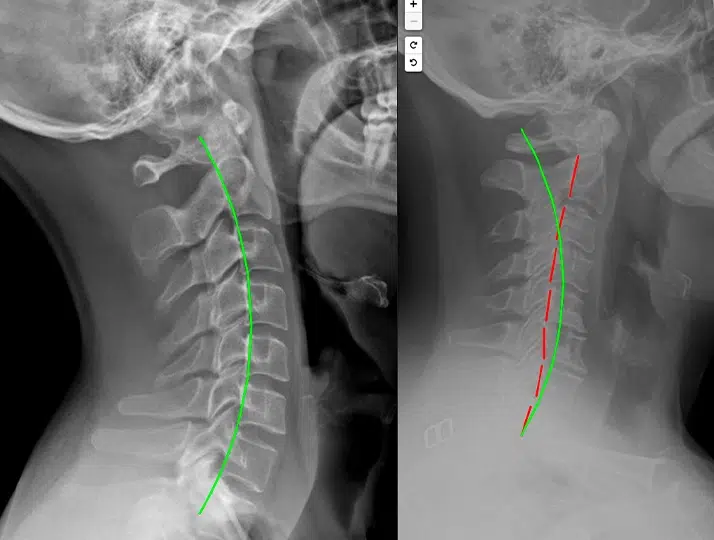
Cervicogenic headache in Traverse City MI is head pain that starts from dysfunction in the neck, often involving joints, muscles, posture, or irritated nerves in the upper cervical spine. It can feel like a regular headache or migraine, which is why many people chase temporary relief before checking the structure that may be driving it.
Why Do Headaches Keep Coming Back in Traverse City MI?
Recurring headaches often return because the trigger has not been fully identified. The World Health Organization reports that headache disorders affect about 40 percent of the global population, or 3.1 billion people, and remain underdiagnosed and undertreated worldwide. That means plenty of people are trying to manage repeat headaches without a clear answer for why they keep showing up.
Sometimes the answer is chemical, hormonal, stress-related, dietary, sleep-related, or neurological. Sometimes it is structural. At Shift Health Center in Traverse City, MI, we see many people whose headaches are connected to the way the neck is positioned and moving.
Picture your head as a bowling ball sitting on top of a flexible tower. If that tower shifts forward, rotates, or loses its normal curve, the muscles and joints around the neck have to work overtime. Eventually, that tension can travel upward and turn into head pain. Your neck basically files a complaint with headquarters.
What Is The Neck Connection With Headaches?
The neck connection means pain signals from the cervical spine can be referred into the head. Tension-type headaches may spread from the neck, according to the World Health Organization, and cervicogenic headache is specifically classified as a secondary headache that originates from the cervical region.
This is why someone can feel pain in the forehead, temples, behind the eye, or base of the skull even when the root dysfunction is lower than where the pain shows up. The nervous system does not always send neat little messages to tell you what’s going on. It sends signals through shared pathways, and the brain has to interpret them.
Common signs that the neck may be involved include:
- Headaches that start at the base of the skull
- Pain that is worse after computer work, driving, or reading
- One-sided head pain
- Neck stiffness before or during the headache
- Reduced range of motion when turning the head
- Headaches after a car crash, sports hit, or fall
- Pain that improves temporarily with massage, stretching, or heat, then returns
None of those signs prove the neck is the ONLY factor. But, they do mean the cervical spine deserves a real evaluation to see if there is a structural problem
How Are Cervicogenic Headaches Different From Migraines?
Cervicogenic headaches start from a problem in the neck, while migraine is a primary headache disorder involving neurological and vascular mechanisms. The symptoms can overlap, which is why a careful history and examination matter.
Migraine commonly includes moderate or severe head pain, sensitivity to light or sound, nausea, and attacks that may last hours to several days. The World Health Organization notes that migraine attacks usually last 4 to 72 hours and may include nausea, vomiting, photophobia, or phonophobia.
Cervicogenic headache tends to have a stronger mechanical pattern. Turning the head, holding poor posture, sleeping awkwardly, or sitting through a long drive can aggravate it. Research also shows that neck pain is extremely common in people with migraine. A systematic review and meta-analysis published in Cephalalgia found neck pain in 77 percent of clinic-based migraine patients compared with 23.2 percent of non-headache patients!
The practical takeaway: headache labels matter, and structure matters too. If your headaches come with neck symptoms, the neck should be part of the conversation.
What Does Shift Health Center Look For?
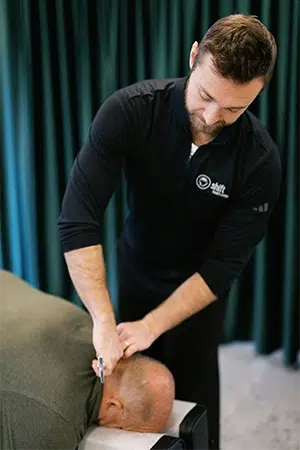
Shift Health Center uses The Shift Solution to identify the root dysfunction, transform damaged tissue, and optimize lifestyle so the result is designed to last.
Step 1: Identify the root dysfunction
We start with a consultation, exam, and digital x-rays when appropriate. The goal is to understand how your spine is aligned, how your neck moves, where stress is accumulating, and whether your headache pattern matches a structural issue. Specifically we look to rule out a significant loss of neck curve (straight or kyphotic neck), ligament laxity, upper cervical dysfunction, or forward head posture.
This matters because two people can both say, “I get headaches,” while needing very different solutions. One person may have upper cervical dysfunction. Another may have forward head posture and loss of cervical curve. Another may need co-management because their symptoms point outside chiropractic care.
Step 2: Transform the damaged tissues
When a structural issue is part of the problem, care may include Chiropractic BioPhysics, upper cervical care, mirror image traction, and specific corrective exercises. Shift Health Center is known for gentle, specific care without twisting, cracking, or popping.
Studies published in the Journal of Physical Therapy Science, Heliyon, Cureus, and the Archives of Clinical Medicine Case Reports show that headache symptoms can improve with the correction of the cervical lordosis (neck curve) or reduction of forward head posture.
Step 3: Optimize lifestyle
Headache recovery is easier when the daily inputs stop feeding the same problem. The World Health Organization lists regular sleep, exercise schedules, healthy eating, hydration, and headache calendars as useful lifestyle strategies for headache relief and trigger identification.
For Traverse City life, this can be practical. Adjust your screen setup before a long workday. Take movement breaks during school-year routines. Stop reading in bed with your neck folded like a lawn chair. If you are spending fall weekends driving to games, hunting property, or squeezing in one more round of golf, your neck mechanics matter.
Which Headache Treatments Should You Compare?
Medication
- What it may help: Pain intensity during an episode.
- Best fit: Short-term symptom control.
- Limitation: Does not correct structural triggers.
Massage/stretching
- What it may help: Muscle tension and temporary mobility.
- Best fit: Mild tension patterns.
- Limitation: Relief may fade if alignment and mechanics stay the same.
General exercise
- What it may help: Stress, circulation, and overall health.
- Best fit: Most headache plans.
- Limitation: Needs consistency and may not be specific enough alone.
Corrective chiropractic care
- What it may help: Neck alignment, motion, and nerve irritation.
- Best fit: Headaches with cervical dysfunction.
- Limitation: Requires evaluation and a plan, not a one-visit guess.
Trigger tracking
- What it may help: Sleep, hydration, foods, stress, and timing patterns.
- Best fit: Anyone with recurring headaches.
- Limitation: Data helps only if you use it.
The best plan usually starts with an accurate diagnosis. If your headache is new, severe, sudden, associated with neurological symptoms, or different from your usual pattern, seek medical care promptly.
When Should You Get Your Neck Checked?
You should get your neck checked if headaches keep returning, start in the neck, follow trauma, worsen with posture, or interfere with work, sleep, exercise, or family life. Headaches are common, but common does NOT mean normal.
At Shift Health Center, our 2-day new patient process is built to remove the guesswork. Day 1 includes consultation, exam, and x-rays when clinically appropriate. Day 2 is your report of findings, where we explain what we found and whether you are a good fit for care.
Can neck problems really cause headaches?
Yes. Cervicogenic headache is a recognized secondary headache that originates from the cervical spine. The pain may show up in the head, temples, behind the eye, or base of the skull because the neck and head share pain pathways through the nervous system.
How do I know if my headache is coming from my neck?
Is chiropractic care safe for headaches?
What headache symptoms need urgent care?
Does Shift Health Center treat migraines too?
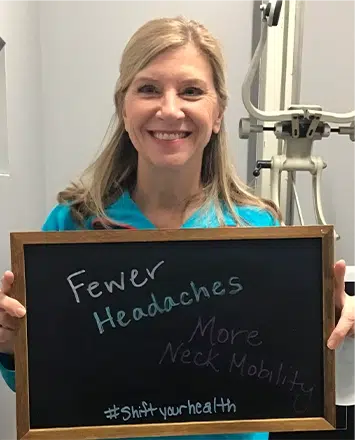
Ready To Find Out If Your Headaches Have A Neck Connection?
Schedule your consultation at Shift Health Center in Traverse City, MI. We will help you identify the root dysfunction, understand your options, and build a plan designed for lasting relief without drugs, surgery, or injections.
Learn more about headache and migraine care at Shift Health Center: https://www.theshifttc.com/headaches-migraines/
Schedule your new patient special: https://www.theshifttc.com/chiropractic-special/
Call: (231) 846-8897
Sources
World Health Organization. Migraine and other headache disorders. Published October 24, 2025. https://www.who.int/news-room/fact-sheets/detail/headache-disorders
National Center for Complementary and Integrative Health. Spinal Manipulation: What You Need To Know. https://www.nccih.nih.gov/health/spinal-manipulation-what-you-need-to-know
Sage Journals, Cephalalgia. Prevalence of neck pain in migraine: A systematic review and meta-analysis. 2022. PubMed record: https://pubmed.ncbi.nlm.nih.gov/35166137/
Moustafa IM, Diab A, Shousha T, Harrison DE. Does restoration of sagittal cervical alignment improve cervicogenic headache pain and disability: A 2-year pilot randomized controlled trial. Heliyon. 2021 Mar 15;7(3):e06467.
Fortner MO, Oakley PA, Harrison DE. Alleviation of chronic spine pain and headaches by reducing forward head posture and thoracic hyperkyphosis: A CBP® case report. J Phys Ther Sci 2018; 30(8):1117-1123.
Norton TC, Oakley PA, Harrison DE. Improving the Cervical Lordosis relieves neck pain and chronic headaches in a pediatric: A CBP® case report with a 1.5-year follow-up. J Phys Ther Sci. 2022 Jan;34(1):71-75.
Fortner MO, Woodham TJ, Oakley PA, Harrison DE. Is the cervical lordosis a key biomechanical biomarker in cervicogenic headache? A CBP® case report with follow-up. J Phys Sci Ther. 2022 Feb;34(2):167-171.
Haas JW, Harrison DE, Harrison DD, Bymers B. Reduction of symptoms in a patient with syringomyelia, cluster headaches, and cervical kyphosis. J Manipulative Physiol Ther 2005; 28(6):452.
Oakley PA, Haas JW, Woodham TJ, Fortner MO, Harrison DE. Resolution of chronic migraine headaches and improvement in cervical spine kyphosis following Chiropractic Biophysics (CBP) treatment: A case report with a seven-month follow-up. Cureus 16(9): e69935. doi:10.7759/cureus.69935.
Chu ECP, Chu VKY, Lin AFC. Cervicogenic Headache Alleviating by Spinal Adjustment in Combination with Extension-Compression Traction. Arch Clin Med Case Rep 2019;3(5): 269-273.

OFFICE HOURS
Monday
10:00am - 1:00pm
3:00pm - 6:00pm
Tuesday
7:00am - 11:00am
Wednesday
10:00am - 1:00pm
3:00pm - 6:00pm
Thursday
8:00am - 12:00pm
2:00pm - 5:00pm
Friday
Closed
Saturday
Closed
Sunday
Closed

Shift Health Center
2400 Northern Visions Dr
Traverse City, MI 49684
P: (231) 846-8897
F: (231) 360-2100