


Why Numb Feet Can Make Your Balance Feel Off in Traverse City MI

Numbness and tingling in the feet can affect balance because peripheral neuropathy in Traverse City MI disrupts the nerve signals your brain uses to sense the ground. The National Institute of Neurological Disorders and Stroke says peripheral nerves carry sensory and movement signals between the brain, spinal cord, and body, including the feet.
If you have ever stepped onto uneven sand at a Northern Michigan beach and thought, "Why do my feet feel like they are guessing?" you already understand the problem better than most anatomy textbooks explain it.
Your feet are supposed to act like built-in GPS. They tell your brain where you are standing, how much pressure is under each foot, and whether the surface below you is flat, slanted, firm, soft, wet, rocky, or trying to ruin your dignity in public.
When neuropathy interferes with that signal, balance becomes less automatic. You may still be strong. You may still be active. You may still be the person who says, "I am fine," while grabbing the kitchen counter like it owes you money.
That is why peripheral neuropathy and balance problems in the feet deserve attention early, especially during a Northern Michigan summer when walking, boating, golfing, gardening, and beach days all demand steady feet.
What Peripheral Neuropathy Does To Your Feet in Traverse City MI
Peripheral neuropathy is damage or dysfunction in nerves outside the brain and spinal cord. According to NINDS, peripheral neuropathy affects millions of people in the United States, and more than 100 types have been identified.
The symptoms often show up first in the feet because many neuropathies are length-dependent. NINDS explains that the farthest nerve endings from the brain, usually in the feet, are often where symptoms develop first or feel worse.
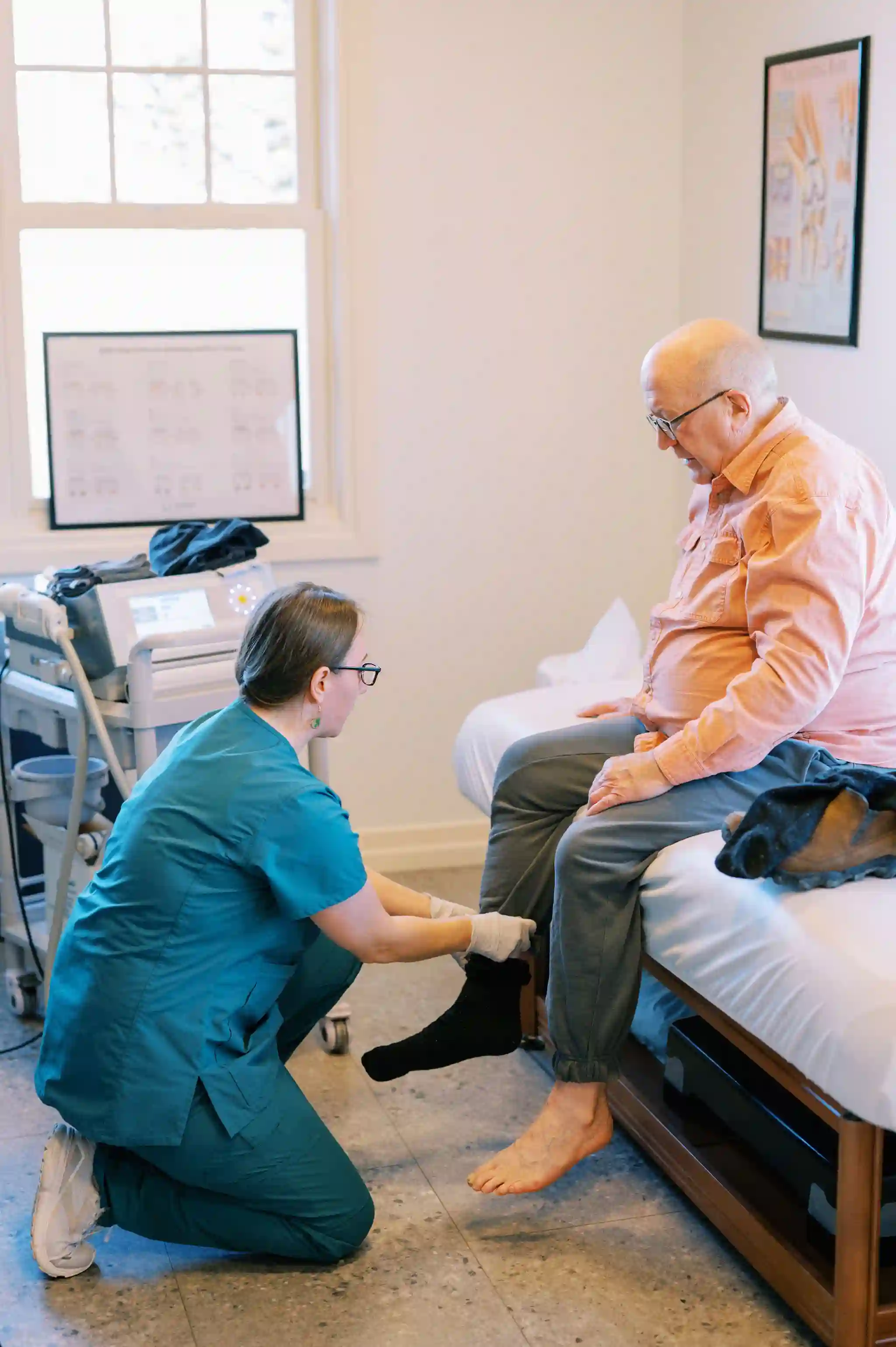
Common foot symptoms include:
- Numbness or reduced sensation
- Tingling, prickling, or pins and needles
- Burning, stabbing, or electric pain
- Feeling like you are wearing socks when you are not
- Weakness or heaviness in the feet or legs
- Trouble sensing the ground clearly
Mayo Clinic lists gradual numbness, prickling, tingling, burning pain, sensitivity to touch, lack of coordination, falling, and muscle weakness as possible symptoms of peripheral neuropathy.
In plain English, the nerves in your feet may stop reporting accurate information. Sometimes the signal gets too quiet. Sometimes it gets noisy. Sometimes it sends the wrong message completely. Very helpful. Thanks, nervous system.
Why Neuropathy Can Cause Balance Problems
Balance depends on clear input from your feet, eyes, inner ear, muscles, and joints. When the nerves in your feet are not sending reliable feedback, your brain has to work harder to keep you upright.
A 2024 case-cohort study published in Frontiers in Aging Neuroscience found that peripheral neuropathy impaired stepping as a postural control mechanism and supported peripheral neuropathy as a genuine risk factor for falls in older adults.
Every person with neuropathy has a different fall risk. Numbness and tingling in the feet deserve attention when your balance is changing.
Here are the warning signs we pay attention to at Shift Health Center:
- You feel unsteady in the dark
- You need to watch your feet when walking
- You stumble on uneven ground more than you used to
- You avoid stairs, docks, trails, or slopes
- You feel less confident walking barefoot
- You notice symptoms spreading from your toes toward your ankles
- You have had a fall or a close call
Northern Michigan makes this more obvious. Grass, sand, gravel, boat docks, golf courses, hiking trails, and wet pavement all ask your feet to adapt quickly. Neuropathy makes that adaptation slower and less precise.
What Causes Numbness And Tingling In The Feet?

Numbness and tingling in the feet can come from many causes, which is why guessing is a bad strategy. Mayo Clinic lists diabetes, autoimmune diseases, infections, inherited conditions, tumors, bone marrow conditions, kidney disease, liver disease, thyroid problems, injuries, and toxin exposure among possible causes of peripheral neuropathy.
The National Institute of Diabetes and Digestive and Kidney Diseases says diabetic peripheral neuropathy typically affects the feet and legs, and about one-third to one-half of people with diabetes have peripheral neuropathy.
At Shift Health Center, we are especially interested in two questions:
- What is causing the nerve problem?
- What can we do to support better function, better stability, and better quality of life?
That is where The Shift Solution comes in.
Step 1: Identify the root dysfunction
The first step is to identify what is actually happening instead of chasing symptoms. NINDS explains that peripheral neuropathy symptoms vary based on whether sensory, motor, or autonomic nerves are affected.
For someone with balance problems, we want to understand sensation, coordination, strength, gait, posture, spinal structure, and lifestyle factors. If the feet are the alarm bell, we still need to inspect the whole building.
Your first visit at Shift Health Center in Traverse City, MI is designed to gather the right information. We review your symptoms, health history, exam findings, and the patterns that show up when your body moves. When appropriate for your case, we may also evaluate posture and structural factors that can affect how your nervous system and lower body function.
The goal is simple: stop guessing.
Step 2: Transform damaged tissues and improve function
Once we understand the pattern, we build a care plan around improving function. Shift Health Center is known for a different style of care because we do not rely on twisting, cracking, or popping as the foundation of treatment.
For neuropathy patients, care may include therapies and strategies designed to support circulation, tissue health, balance, mobility, and nerve function. The exact plan depends on the findings from your consultation and exam.
This is also where we talk honestly. Peripheral neuropathy can be complex. NINDS notes that symptoms may develop over days, weeks, or years, and some forms improve when the underlying cause can be treated. Early attention matters. Waiting until your feet feel completely disconnected from the planet is not a power move.
Step 3: Optimize lifestyle so progress lasts
Better balance includes what happens during appointments and what happens between them. The CDC recommends adults get at least 150 minutes of moderate-intensity physical activity each week and at least 2 days of muscle-strengthening activity each week.
For someone with neuropathy, movement needs to be chosen wisely. Walking is great if it is safe. Strength training can support stability when it is appropriate for your current ability. Balance practice can help your brain and body rebuild confidence, but it should match your starting point.
Practical summer tips:
- Wear supportive shoes on uneven ground
- Use railings on docks and stairs
- Avoid walking barefoot if you cannot clearly feel the ground
- Keep walkways clear at home
- Use a light at night when walking to the bathroom
- Tell someone if you have had a stumble or near fall
- Get evaluated if numbness, tingling, or balance changes are getting worse
The point: keep you active while taking real symptoms seriously.
When Should You Get Checked For Neuropathy Symptoms?
Mayo Clinic recommends seeking medical care right away if you notice tingling, weakness, or pain in your hands or feet, because early diagnosis and treatment can help manage symptoms and prevent further peripheral nerve damage.
You should schedule an evaluation if you notice:
- Numbness or tingling that keeps returning
- Burning pain in the feet
- Balance problems with neuropathy symptoms
- Trouble feeling temperature or texture under your feet
- Symptoms that are moving upward
- A fall, stumble, or loss of confidence walking
If your feet are starting to feel unreliable, do not wait for them to file a formal complaint.
FAQ
Can neuropathy cause balance problems?
Yes. Peripheral neuropathy can affect balance when damaged nerves in the feet send poor sensory feedback to the brain. Mayo Clinic lists lack of coordination and falling as possible symptoms, and a 2024 Frontiers in Aging Neuroscience study found peripheral neuropathy can impair stepping responses used for balance.
Why do my feet feel numb and tingly?
Numbness and tingling in the feet can happen when peripheral nerves are irritated or damaged. Mayo Clinic lists diabetes, autoimmune disease, infections, inherited conditions, injuries, metabolic problems, and toxin exposure among possible causes, which is why an evaluation matters.
Is neuropathy always caused by diabetes?
No. Diabetes is a common cause, and NIDDK says about one-third to one-half of people with diabetes have peripheral neuropathy. NINDS and Mayo Clinic both describe many other possible causes, including autoimmune conditions, infections, inherited disorders, injuries, and toxin exposure.
Can better balance exercises fix neuropathy?
Balance exercises may help stability, but the underlying nerve problem still needs attention. A 2012 review in Oncology Nursing Forum reported substantial evidence supporting strength and balance training for older adults at fall risk, with early evidence for people with peripheral neuropathy.
Where can I find neuropathy treatment in Traverse City?
Shift Health Center provides neuropathy-focused consultations in Traverse City, MI. We use The Shift Solution to identify root dysfunction, support better function, and build a plan for long-term health. Learn more at https://www.theshifttc.com/neuropathy/ or call (231) 846-8897.
Ready to feel steadier on your feet?
If numbness, tingling, or balance problems are keeping you from enjoying summer in Northern Michigan, schedule a consultation at Shift Health Center in Traverse City, MI.
We will help you identify what is going on, explain your options clearly, and build a plan designed around long-term function. Life is too short to sit out because your feet stopped giving reliable updates.
Sources:
National Institute of Neurological Disorders and Stroke. Peripheral Neuropathy. https://www.ninds.nih.gov/health-information/disorders/peripheral-neuropathy
Mayo Clinic. Peripheral neuropathy: Symptoms and causes. Updated May 19, 2026. https://www.mayoclinic.org/diseases-conditions/peripheral-neuropathy/symptoms-causes/syc-20352061
National Institute of Diabetes and Digestive and Kidney Diseases. Diabetic Neuropathy. Last reviewed February 2018. https://www.niddk.nih.gov/health-information/diabetes/overview/preventing-problems/nerve-damage-diabetic-neuropathies
Bretan O, et al. Peripheral neuropathy, an independent risk factor for falls in the elderly, impairs stepping as a postural control mechanism: A case-cohort study. Frontiers in Aging Neuroscience. 2024. https://pmc.ncbi.nlm.nih.gov/articles/PMC11625983/
Tofthagen C, et al. Strength and balance training for adults with peripheral neuropathy and high risk of fall: current evidence and implications for future research. Oncology Nursing Forum. 2012. https://pubmed.ncbi.nlm.nih.gov/22940521/
Centers for Disease Control and Prevention. Adult Activity: An Overview. Updated December 20, 2023. https://www.cdc.gov/physical-activity-basics/guidelines/adults.html

OFFICE HOURS
Monday
10:00am - 1:00pm
3:00pm - 6:00pm
Tuesday
7:00am - 11:00am
Wednesday
10:00am - 1:00pm
3:00pm - 6:00pm
Thursday
8:00am - 12:00pm
2:00pm - 5:00pm
Friday
Closed
Saturday
Closed
Sunday
Closed

Shift Health Center
2400 Northern Visions Dr
Traverse City, MI 49684
P: (231) 846-8897
F: (231) 360-2100