


Back Pain and Stiffness After GLP-1 Weight Loss? Start Here in Traverse City MI
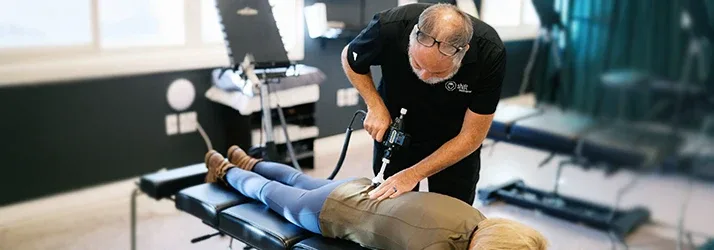
Back pain and stiffness after GLP-1 weight loss in Traverse City MI can happen for several reasons, including changes in posture, muscle support, movement habits, activity levels, and spinal loading. GLP-1 medications are not proven to directly cause back pain in most people, but rapid body changes can reveal problems that were already building.
GLP-1 medications like semaglutide and tirzepatide have changed the weight loss conversation. For many people, that has been a good thing. Weight loss can reduce stress on joints, improve mobility, and help people feel like they finally have momentum again.
But here is the part that does not get talked about enough.
Some people lose weight and still feel stiff. Or their back starts aching. Or their posture feels different. Or they feel weaker than expected, even though the scale is moving in the right direction.
That can be frustrating. You did the thing everyone says should help your body feel better, and now your back is acting like it missed the memo.
At Shift Health Center in Traverse City, we do not look at this as a simple medication side effect story. That would be too easy, and probably too sloppy. The better question is this: what changed in your body, and what did that change expose?
Are GLP-1 medications proven to cause back pain?
Back pain is not established as a common direct side effect of GLP-1 medications in the same way nausea, vomiting, diarrhea, constipation, and abdominal pain are commonly listed in prescribing information.
The FDA prescribing information for Wegovy, updated in 2025, lists the most common adult adverse reactions as gastrointestinal issues and other symptoms such as headache, fatigue, dizziness, abdominal distension, belching, and low blood sugar in patients with type 2 diabetes. Back pain is not highlighted as one of the common reactions occurring in 5 percent or more of adults.
That matters because we should not overclaim causation. If someone starts a GLP-1 and develops back pain, it does not automatically mean the medication caused the pain.
But it also does not mean the pain is random.
Pain usually has a reason. Sometimes the reason is direct. Sometimes it is indirect. Sometimes the body changes quickly enough that old weaknesses become harder to ignore.
Why Might Back Pain Show Up After Weight Loss?
Back pain may show up after weight loss because the body is adapting to a new structure, new movement patterns, and sometimes less muscle support than before.
When your weight changes, your center of gravity changes. Your posture can change. Your walking mechanics can change. The way your hips, knees, feet, and spine absorb stress can change. If your spine was already misaligned, your core was undertrained, or your mobility was limited, weight loss may reveal the problem instead of creating it from scratch.
Think of it like taking weight out of a backpack with crooked straps. The backpack is lighter, which is good. But if the straps are still uneven, it can still pull your body in the wrong direction.
Common reasons people feel back pain or stiffness after weight loss include:
- Changes in posture and center of gravity
- Reduced muscle support during rapid weight loss
- Tighter hips from prolonged sitting or lower activity
- Weak glutes and core muscles
- Old disc, joint, or alignment problems becoming more noticeable
- Increased activity before the body is ready
- Poor foot mechanics or unsupported arches
- Inflammation, stress, poor sleep, or dehydration
None of these mean the weight loss was bad. They mean the body may need a better support plan.
What does muscle loss have to do with stiffness?
Muscle helps stabilize joints, support posture, protect the spine, and keep movement efficient. When people lose weight quickly, some of that weight can come from lean body mass, not just fat.
An exploratory body composition analysis from the STEP 1 semaglutide trial reported that participants had substantial reductions in fat mass and visceral fat mass, while total lean body mass also decreased by 9.7 percent from baseline. The proportion of lean mass relative to total body mass increased, but the absolute lean mass loss still matters when we are talking about strength, posture, and mobility.
That is the key nuance. Losing fat can reduce stress on the body. Losing too much muscle support can make the body feel less stable.
If your stabilizing muscles are not keeping up, your spine may work harder than it should. That can feel like stiffness, fatigue, tightness, or recurring low back pain.
Can Weight Loss Improve Joint Pain Too?
Yes. Weight loss can improve joint pain for many people, especially when joint stress is part of the problem.
A 2024 New England Journal of Medicine trial studied once-weekly semaglutide in people with obesity and knee osteoarthritis. The semaglutide group had greater improvement in WOMAC pain scores and physical function than placebo over 68 weeks, with serious adverse events occurring at similar rates between groups.
So the point is not that GLP-1 weight loss is bad for pain. In many cases, it may help.
The point is that pain is individual. If your knee feels better but your back feels worse, your body is giving you information. The answer is not panic. The answer is a better evaluation.
Why Posture Can Change After Weight Loss in Traverse City MI
Posture can change after weight loss because the body is adapting to a different shape, different load, and different balance point.
If the spine already had structural issues, weight loss does not automatically correct them. A forward head posture, reduced spinal curve, pelvic imbalance, scoliosis pattern, or old injury can still keep loading the body poorly.
This is where people get stuck. They assume losing weight should fix everything. When it does not, they blame themselves.
Do not do that.
Weight loss can reduce one source of stress, but it does not automatically rebuild spinal alignment, restore mobility, strengthen stabilizing muscles, or correct old movement patterns. That work usually has to be done on purpose.
Step 1: Identify the root dysfunction
At Shift Health Center, the first step is to identify what is actually driving the back pain or stiffness.
We are not guessing based on one symptom. We look at posture, spinal alignment, movement patterns, x-rays when clinically appropriate, and how the nervous system may be involved. The goal is to understand whether the problem is coming from the joints, discs, muscles, nerves, posture, feet, or a combination.
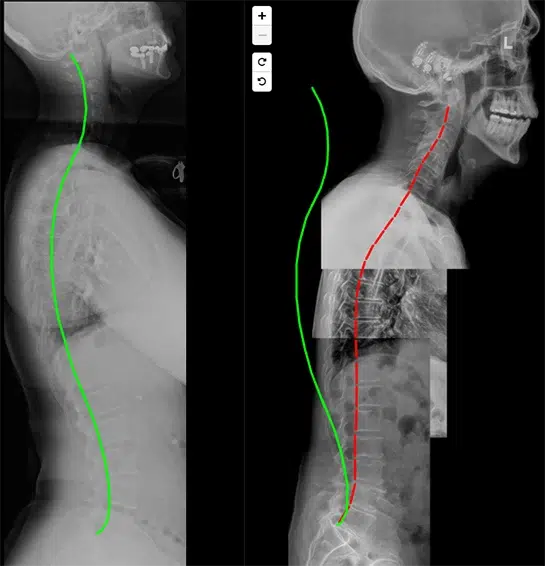
That matters because two people can have the same symptom for very different reasons.
One person may have tight hips and weak glutes. Another may have lumbar disc irritation. Another may have a pelvic imbalance or poor spinal curve. Another may have foot mechanics that keep feeding stress up the chain.
Same pain. Different root dysfunction. Different plan.
Step 2: Transform damaged tissues and movement patterns
Once we know what is driving the problem, the next step is to help the body move and support itself better.
Shift Health Center is not your traditional chiropractor. Our care does not rely on twisting, cracking, or popping. We use research-backed structural and rehabilitative approaches designed to create longer-term change.
Depending on the case, care may include Chiropractic BioPhysics, mirror image traction, gentle upper cervical care, spinal corrective exercises, posture correction, Foot Levelers custom orthotics, SoftWave Tissue Regeneration Therapy, or red light therapy.
The goal is not just temporary relief. The goal is to improve how the body is functioning so the spine does not keep paying the bill.
Step 3: Optimize lifestyle so results last
If you are using a GLP-1 or recently lost weight, your spine and joints may need a support system.
That usually includes smart strength work, enough protein, hydration, walking, mobility, posture awareness, and a plan for gradually increasing activity. It may also mean getting evaluated before jumping into intense workouts, long hikes, golf marathons, or weekend warrior projects.
The best time to address back pain is before it becomes your new normal.
If you are losing weight, that is a window of opportunity. Your body is already changing. With the right support, you can use that change to improve mobility, posture, strength, and confidence.
When Should You Get Checked?
You should get checked if back pain or stiffness keeps returning, limits your movement, affects sleep, travels into the hip or leg, or comes with numbness, tingling, burning, or weakness.
You should also talk with your prescribing medical provider if symptoms started after beginning or changing a medication dose, or if you have severe abdominal pain, chest pain, shortness of breath, fever, bowel or bladder changes, or rapidly worsening symptoms.
At Shift, we focus on the musculoskeletal side: spine, posture, mobility, structural stress, and root dysfunction. We do not manage GLP-1 prescriptions, and we are not here to tell you whether you should or should not take one. That decision belongs between you and your prescribing provider.
Our job is to help you understand why your body hurts and what can be done about it.
FAQs
Can GLP-1 weight loss cause back pain?
GLP-1 medications are not proven to directly cause back pain in most people, but weight loss can change posture, muscle support, activity levels, and spinal loading. If back pain appears during or after weight loss, a spine and movement evaluation can help identify the real cause.
Why do I feel stiff after losing weight?
Should I stop my GLP-1 if my back hurts?
Can chiropractic care help after GLP-1 weight loss?
What is the best next step for back pain after weight loss?
Ready to figure out what your back is trying to tell you?
If you have lost weight with a GLP-1 and now feel back pain, stiffness, or mobility changes, do not write it off as random. Your body may be asking for better support.
Schedule your consultation at Shift Health Center in Traverse City, MI. We will help identify the root dysfunction and build a plan designed to help you move better, feel better, and get more out of the progress you have already made.
Give us a call at (231) 846-8897 or visit our current special page to get started.
Sources
- FDA. Wegovy prescribing information, semaglutide injection, updated 2025. https://www.accessdata.fda.gov/drugsatfda_docs/label/2025/215256s024lbl.pdf
- Wilding JPH, Batterham RL, Calanna S, et al. Once-weekly semaglutide in adults with overweight or obesity. New England Journal of Medicine. 2021.
- STEP 1 body composition exploratory analysis. Impact of semaglutide on body composition in adults with overweight or obesity. Journal of the Endocrine Society. 2021.
- Bliddal H, Bays H, Czernichow S, et al. Once-weekly semaglutide in persons with obesity and knee osteoarthritis. New England Journal of Medicine. 2024.
Back pain and stiffness after GLP-1 weight loss may relate to posture, mobility, strength, or spinal stress. Shift Health Center can help.

OFFICE HOURS
Monday
10:00am - 1:00pm
3:00pm - 6:00pm
Tuesday
7:00am - 11:00am
Wednesday
10:00am - 1:00pm
3:00pm - 6:00pm
Thursday
8:00am - 12:00pm
2:00pm - 5:00pm
Friday
Closed
Saturday
Closed
Sunday
Closed

Shift Health Center
2400 Northern Visions Dr
Traverse City, MI 49684
P: (231) 846-8897
F: (231) 360-2100